
Loading...
Serving Leominster, MA and surrounding areas. (978) 230-0966
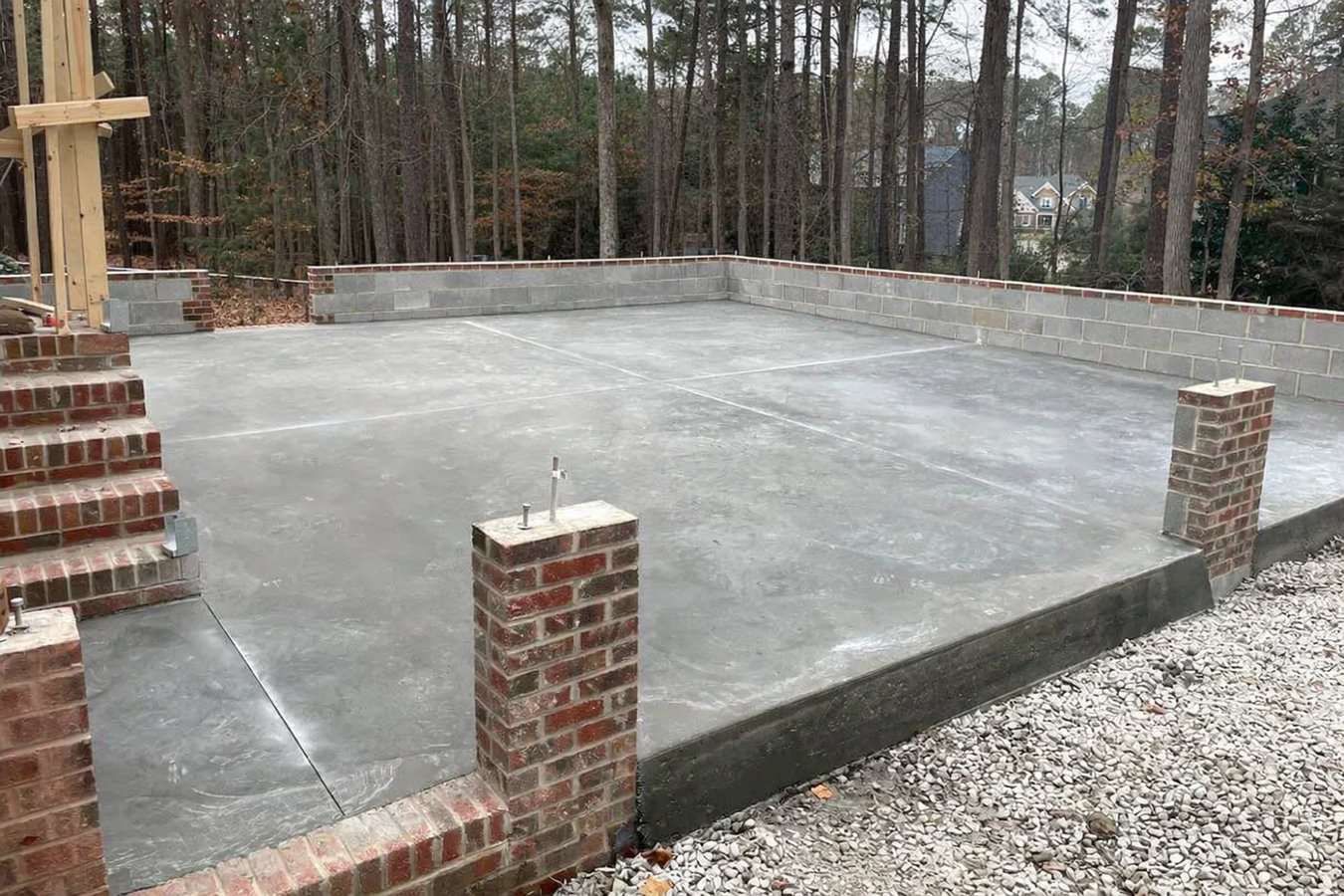
Adding a garage, workshop, or home addition? We pour slab foundations with frost-protected edges and proper base preparation so the concrete does not crack or shift in Worcester County winters.
Slab foundation building in Leominster means excavating and leveling the site, laying a compacted gravel base and moisture barrier, placing reinforcement, and pouring the concrete in a single day - most residential projects take one to two weeks from permit approval to a finished, inspected slab.
A slab is the practical foundation choice for detached garages, single-story additions, and accessory structures across Leominster. It is faster and less expensive than a full basement, and when it is built correctly, it holds up through decades of central Massachusetts freeze-thaw cycles without the perimeter shifting or cracking.
Many homeowners pairing a slab with a new garage or addition also need foundation installation for the main structure, or concrete footings below the frost line to anchor walls that sit alongside the slab.
If you are planning a garage, workshop, or addition in Leominster, a foundation must come before any framing. A slab is often the right choice for single-story structures where a basement is not needed - it is faster to build and less disruptive to your property than full excavation.
Small hairline cracks are common, but cracks wider than a quarter-inch, diagonal cracks running from corners, or sections where one side sits higher than the other are signs of movement in the ground below. In Leominster, glacial till soil can shift unevenly after wet springs or hard winters, and what starts as a small crack can become a structural problem if left alone.
If water appears on your slab floor after heavy rain or spring snowmelt, the original moisture barrier may have failed or was never properly installed. Leominster's spring thaw can saturate the ground quickly, and persistent moisture under a slab erodes the soil beneath it and eventually causes settling and cracking.
If furniture wobbles on a flat floor or a ball rolls consistently toward one corner of a room, the slab may have settled unevenly. This happens when the soil beneath was not properly compacted before the pour, or when voids develop over time from water erosion. In older Leominster homes built on fill or disturbed soil, this is more common than most homeowners expect.
Every slab we build starts with the prep work that most homeowners never see but always feel years later. We excavate to the required depth, remove any unsuitable soil, and compact the ground before laying a gravel base and a polyethylene moisture barrier. Steel reinforcing bar or welded wire mesh goes in before a single cubic yard of concrete is ordered. That sequence is what separates a slab that stays flat from one that develops problems in its first few winters.
We also handle the permit process through the Leominster Building Department from start to finish, including scheduling the required inspection before the pour. You will not have to track down permit status or wonder whether the inspector has signed off. For slabs that sit adjacent to existing structures, we coordinate the connection between the new slab and your current foundation so the transition is solid and properly detailed.
For projects that require load-bearing points - posts, columns, or walls placed directly on the slab - we incorporate thickened sections and properly sized concrete footings below the frost line where the code requires it. This is standard in Leominster due to the 48-inch frost depth, and any quote we provide reflects it.
The most common request in Leominster - built to support vehicle loads with a proper apron and control joints.
Sized and detailed to connect cleanly to the existing structure, with permits coordinated through the city.
Poured as the foundation for a new single-story structure after site grading is complete.
Workshops, sheds, and outbuildings where a simple, level base is needed without full basement excavation.
Leominster sits in north-central Worcester County, where the frost line reaches approximately 48 inches deep in a hard winter. That is not a number to guess at. The perimeter of every slab we build is thickened or insulated to prevent frost heave from cracking and lifting the edges over time. Skipping this detail is common with contractors who are not familiar with central Massachusetts soil and climate conditions, and it is one of the most frequent reasons slabs fail before their time.
Leominster also has a large share of homes built between the 1940s and 1970s, many of which are being expanded with garages or additions. That means a significant portion of our slab work involves connecting a new pour to an existing structure - a detail that requires careful planning around how the two foundations sit relative to each other and how the building department wants to see it documented. We have done this many times in Leominster and know what the local inspector expects to see.
We serve homeowners across the region, including Fitchburg, Gardner, and Worcester- all of which share the same frost depth requirements and glacially deposited soil conditions that shape how slabs are built in this part of Massachusetts.
We ask about the structure you are building, the size, and what your lot looks like. We schedule a site visit before giving you a price, because soil conditions and access for a concrete truck both affect the cost. You will hear back within one business day.
We apply for your building permit through the Leominster Building Department before any digging starts. This typically takes one to two weeks. We track it and keep you updated - you will not need to chase paperwork.
Once the permit is in hand, we excavate, remove unsuitable soil, compact the ground, and lay the gravel base and moisture barrier. Forms are set and reinforcement is placed. A city inspector reviews the setup before the pour - this is required in Leominster.
The concrete truck arrives and the slab is poured, leveled, and finished in a single day. We advise on the curing timeline - typically at least one week before light construction begins on top. A final city inspection closes the permit.
We handle the Leominster permit from start to finish. Free on-site estimates, no pressure. Replies within one business day.
(978) 230-0966Every slab we pour in the Leominster area includes thickened, frost-protected edges sized for Massachusetts's code-required frost depth. This is not optional in central Massachusetts, and it is in every quote we give - not an add-on you have to ask about.
We have worked through the Leominster Building Department permit and inspection process many times. We pull the permit in our name, schedule the pre-pour inspection, and get the final sign-off. Your project has a clean paper trail when we are done.
Leominster sits on glacial till - a mix of clay, gravel, and occasional boulders - that can behave differently across a single lot. We assess what is actually there during site prep and address soft spots or unsuitable material before the concrete goes in. You will not discover a problem after the fact.
We carry the state-required Massachusetts Home Improvement Contractor registration and proper insurance. You can verify our registration through the state's Office of Consumer Affairs at mass.gov - it takes two minutes and confirms we are accountable under Massachusetts law.
The Portland Cement Association notes that preparation work - grading, compaction, and moisture control - determines how long a slab lasts far more than the concrete mix alone. We follow those standards on every project, and we will show you what we did before the concrete goes in so you know the work was done right. Learn more about slab construction best practices at cement.org.
Full basement and foundation wall installation for new homes and additions throughout Leominster.
Learn moreProperly placed footings below the frost line that keep your slab or walls from shifting over time.
Learn moreLeominster's construction season runs from late April through October - permit wait times mean early planning pays off. Call or request an estimate today and we will walk your site and give you a written price.