
Loading...
Serving Leominster, MA and surrounding areas. (978) 230-0966
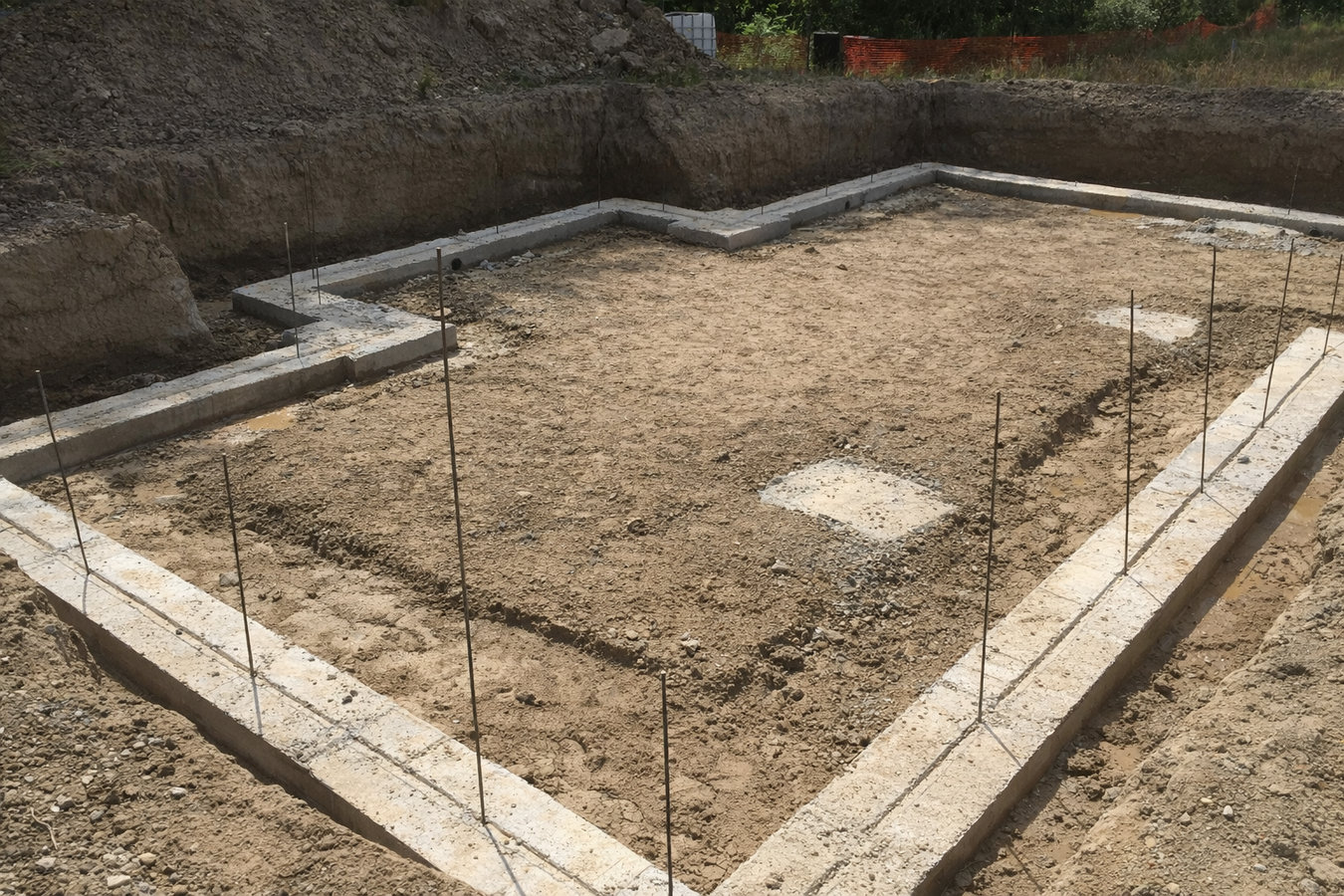
A tilting deck, a cracking foundation, or a new addition that needs a solid start? We dig to the required four-foot frost depth, place steel reinforcement, and pour after the city inspection - so your structure stays put through every Leominster winter.
Concrete footings in Leominster involve excavating below the 48-inch Massachusetts frost line, placing steel reinforcing bars in the formed holes or trenches, passing a required city inspection, and then pouring - most residential footing projects take one to two on-site days, with framing allowed to begin roughly a week after the pour.
A footing is the buried concrete pad that carries the weight of a structure down to stable ground. Without one built to the right depth and dimensions, everything built above it - a deck, a porch, a garage, an addition - is sitting on ground that moves every winter. In Leominster, where the ground can freeze hard to four feet deep from November through March, a footing at the wrong depth will get pushed upward by frost heave, tilting whatever is attached to it. The first sign is usually a gap between a deck and the house; the last sign is a structure that is no longer safe to use.
Footings are often the first concrete work in a larger project. If you are adding a garage, the footings and foundation installation happen before framing begins. If you are adding onto an existing structure, footings may be combined with a foundation raising project to bring everything to the same level before the new framing goes up.
If you can see a gap opening between your deck and the house sill, or if the deck surface slopes noticeably when you walk on it, the footings underneath have likely shifted. In Leominster, this almost always means original footings were not buried deep enough and frost heave has been pushing them upward over repeated winters. A tilting deck is not a cosmetic issue - it is a safety hazard that does not correct itself.
Horizontal or stair-step cracks in a foundation wall, or long cracks running across a basement floor, can signal that the footings below are no longer doing their job evenly. Leominster's clay-heavy and rocky soils can shift and settle under uneven load, putting differential pressure on older footings. Not every crack is a crisis, but any crack wider than a pencil line is worth having a professional look at before it widens further.
When footings fail or settle unevenly, the whole frame of the house can rack slightly out of square. Doors that used to close easily may now stick or swing open on their own; windows may no longer sit level in their frames. This is a sign worth taking seriously in older Leominster homes, where original footings may have been built to earlier standards that did not account for the city's frost depth.
Any new structure attached to or near your home needs proper footings before framing begins. This is not optional in Leominster - the building permit process requires it, and a city inspector will verify depth and steel placement before the concrete is poured. If you are in the planning phase for any of these projects, footing work is the first conversation to have with a contractor.
Every footing project starts with a site visit to assess access, identify any obvious signs of ledge rock or wet soil, and confirm the scope before we put a number on paper. Leominster's glacially deposited ground can include boulders and ledge just a foot or two below the surface - contractors who quote over the phone without walking the site are not accounting for what is actually underground. Once we have a clear picture, we apply for the building permit through the Leominster Building Department and schedule around the required inspection timeline before we schedule the dig.
On the day work begins, we excavate the footing holes or trenches to at least four feet deep - the minimum required by the Massachusetts building code to keep the footing below the frost line in this climate. We set forming materials, place steel reinforcing bars throughout the footing, and notify the city to schedule the inspection. The inspector confirms depth and steel placement before any concrete is poured. That step is required, and it is genuinely in your interest - it means a neutral third party has verified the work before it is buried permanently underground.
After the inspection is passed, concrete is delivered by a ready-mix truck and poured into the forms. The crew consolidates the concrete to eliminate air pockets and finishes the top surface level. Most residential pours take less than an hour once the truck arrives. After a curing period of at least seven days, we backfill around the footings, clean up the site, and coordinate with your framing crew or general contractor on the timeline for the next phase. For projects that also require a full foundation installation or a foundation raising, we handle the footing and foundation phases as a continuous scope so mobilization, permits, and inspections are coordinated from the start.
The most common residential footing project - typically four to eight holes dug to frost depth, with a tube form and rebar in each.
Continuous or spread footings for new attached structures, coordinated with the foundation or slab pour that follows.
For older Leominster homes where original footings have shifted, heaved, or been compromised by frost damage or age.
Code-compliant footings for detached structures that require permitted footing work before framing can begin.
Massachusetts requires footings to be buried at least 48 inches below the finished ground surface - four feet down. That is deeper than most warmer-climate states require, and for you as a homeowner it means more excavation labor and more concrete volume than national cost guides suggest. The reason for that depth is Leominster's winters: the ground here can freeze hard to four feet or deeper, and anything shallower gets pushed upward when the soil expands. That upward movement - frost heave - is what tilts decks, cracks foundation walls, and shortens the life of anything built on footings that do not reach stable unfrozen ground.
The soil conditions in this region add another layer of complexity. Leominster sits in an area shaped by glaciers, and the ground here frequently contains ledge rock, boulders, and dense glacial till just below the surface. When a contractor hits rock during excavation, the job gets harder and slower - sometimes requiring a jackhammer or hydraulic breaker. This is not unusual, but it is a real cost variable that a flat-rate estimate may not account for. Homeowners in Fitchburg and Gardner face the same soil conditions, and we work across all three cities regularly.
A significant portion of Leominster's residential neighborhoods were built in the mid-20th century, and many of those homes are now being expanded with additions, new garages, or deck replacements. Older homes sometimes have footings built to earlier standards - shallower depth, no steel reinforcement - that were adequate then but are now being asked to support new loads. We assess what is already underground before proposing new work, so you are not paying for footings that do not match your home's actual structural situation. Property owners in Worcester and surrounding communities face the same mid-century housing challenges, and our regional experience covers all of them.
The first conversation covers the basics: what you are building, where on the property, and whether a permit has been started yet. Most footing projects require a site visit before we can give you an accurate number - a good contractor will not quote footing work over the phone without seeing the ground.
We walk the site to assess access, look for signs of ledge rock or wet soil, and measure the scope. You receive a written estimate breaking out labor, materials, and permit fees. If there is a realistic chance of hitting rock - common in Leominster's glacial soils - we explain how that is handled before you commit to anything.
We apply for the building permit through the Leominster Building Department. Once approved, we dig to at least four feet, set forms, and place rebar. A city inspector visits before the pour to verify depth and steel - that inspection is required and is genuinely in your interest. We do not pour until it passes.
Concrete is poured by ready-mix truck after the inspection. Most residential pours take less than an hour on-site. After at least seven days of curing, we backfill, remove equipment, and clean up the yard. You receive documentation from the permit and inspection confirming the work was done correctly - important for your records and for any future sale of the property.
Free on-site estimate. We handle all permits and coordinate the required city inspection before the pour. Reply within one business day.
(978) 230-0966We hold the Massachusetts Construction Supervisor License required to oversee structural work in this state. That license is verifiable through the state's online lookup tool - ask for our license number and confirm it yourself. It means the person overseeing your project has passed a state exam and carries legal accountability for the work.
We pull the required permit through the Leominster Building Department on every footing project and schedule the city inspection before the pour. A permitted and inspected footing creates a paper trail that protects you at resale. Any contractor who suggests skipping this step is creating a liability that stays with your property.
Massachusetts requires footings at 48 inches minimum, and we do not cut that short regardless of what the site looks like at two feet. Shallow footings are the single most common cause of the tilting decks and cracked foundation walls we see in Leominster's older neighborhoods. We go to depth because the winters here demand it.
Our footing work follows practices established by the American Concrete Institute, and we have direct experience with the ledge rock, glacial till, and clay soil conditions common across Worcester County. We have hit rock on jobs in Leominster, Fitchburg, and Gardner - we know how to price for it and how to handle it without stopping your project.
Footing work is invisible once the project is done, but it determines whether everything above it stays level and safe through decades of Leominster winters. Our licensing, permit compliance, inspection coordination, and regional soil experience combine to give you a foundation that will not become a problem after framing begins.
When footings have shifted beyond repair, foundation raising may be the next step to restore a level and safe base.
Learn moreFull foundation work for new construction or whole-structure replacements starts with the same frost-depth principles as individual footings.
Learn moreLeominster contractors book up fast once the ground thaws - reach out now and lock in your spot before the season opens.