
Loading...
Serving Leominster, MA and surrounding areas. (978) 230-0966
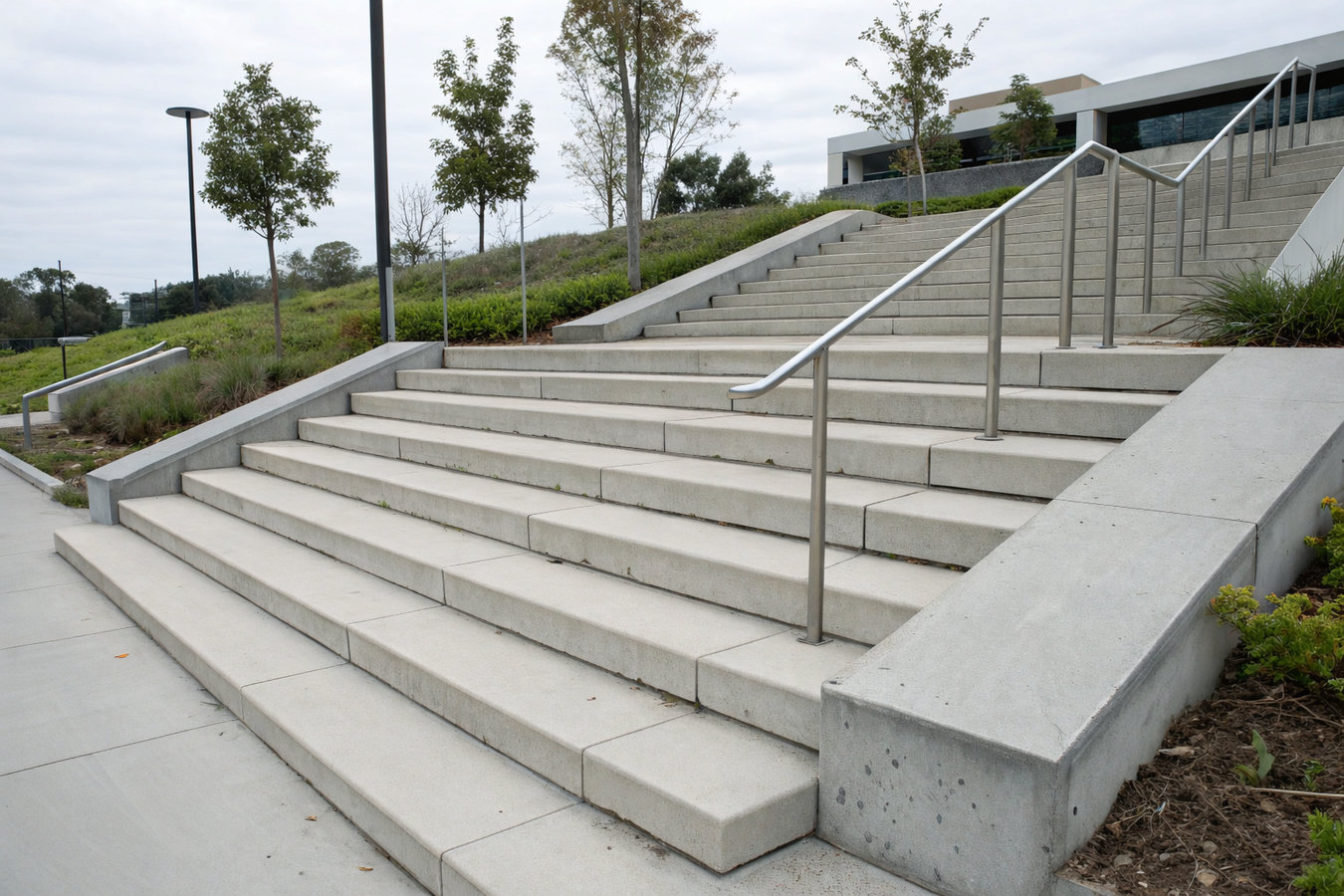
Crumbling edges, tilted treads, or a stoop that has shifted away from the foundation? We replace entry steps with a frost-resistant pour that stays level and safe through every Leominster winter.
Concrete steps construction in Leominster means demolishing the old structure, building a compacted gravel base that goes below the frost line, and pouring a properly cured set of steps - most residential projects take one to two days on-site, with the steps ready for normal foot traffic about a week after the pour.
Front steps are one of the most overlooked concrete surfaces on a home, but they are also one of the most safety-critical. Steps that have shifted, tilted, or developed cracks running through the full depth of a tread are a genuine hazard every time someone walks in or out, especially in winter when ice forms on uneven or poorly draining surfaces. In Leominster, where freeze-thaw cycles repeat dozens of times between November and March, steps that were not built correctly from the start rarely give you a warning before they become a problem.
Many homeowners replace their steps at the same time as a concrete sidewalk or a slab foundation project, so the base preparation and concrete mix are handled consistently across all surfaces at once.
If the corners and edges of your steps are breaking off in chunks or the surface is peeling away in thin layers, that is freeze-thaw damage - a very common pattern in Leominster winters. Once the surface starts to go, water gets in faster, the damage accelerates, and patching rarely holds for more than a season or two. Replacement is usually more cost-effective at that point.
If one or more steps look noticeably lower than they used to, or if the whole stoop has pulled away from your foundation, the base beneath the steps has shifted. This is especially common in older Leominster homes where steps were poured directly on soil without a proper gravel base or frost footing. A tilted step is a trip hazard and does not correct itself.
Hairline surface cracks are often cosmetic. A crack that runs all the way across a step and appears to go through the full thickness means that step has lost structural integrity - it may even flex slightly when you stand on it. That is a safety issue that goes beyond appearance and should be addressed before ice season arrives.
Each step should slope slightly forward so water runs off the front edge. If puddles sit on your steps after rain - or ice forms in those puddles in winter - the steps were poured without the right slope or have settled out of level. Standing water speeds up freeze-thaw damage and makes steps dangerous during Leominster's icy stretches.
Every steps project we take on starts with demolition and removal of the old structure - no pouring over failing concrete. Once the area is cleared, we excavate down to stable ground, add a compacted gravel base, and set up the formwork that defines the shape of your new steps. For taller sets of stairs or projects that connect to the foundation, we install a concrete footing below Leominster's frost line to prevent any movement during winter. None of that is visible once the job is done, but it is what determines whether your steps stay level for the next 30 years.
The pour itself usually takes a few hours. We work quickly because concrete begins to set within a short window, and every detail - the slope of each tread, the texture of the surface, the smoothness of the risers - has to be addressed before it hardens. We apply a broom finish to every set of steps we build, creating the fine texture that gives you grip in rain, snow, and light ice. The result is a surface that is comfortable underfoot and easy to maintain.
For projects that involve a front entrance, we often combine steps with a concrete sidewalk from the street to the door, poured at the same time for a uniform look and consistent base preparation. When structural concerns near the foundation are part of the picture, we can also coordinate with slab foundation work so everything is addressed in a single mobilization.
The most common request - full demolition of the existing stoop and a fresh pour sized to your entrance.
Suited for secondary entrances, bulkhead access, or deck-to-yard transitions that get regular use.
For taller entries that need a flat transition surface at the top - keeps the approach safe and usable in winter.
Poured after final grading on new builds and additions, coordinated with the rest of the concrete scope.
A large portion of Leominster's residential neighborhoods - particularly the areas near downtown and the Highlands - have homes built between the 1920s and 1960s. Many of those properties still have their original concrete or masonry stoops, which are now 60 to 100 years old and approaching or past the end of their useful life. If your home falls into that category, your contractor will almost certainly need to demolish the existing structure before pouring new steps. Trying to save the old base or pour over it is a shortcut that leads to the same problems within a few years.
Central Massachusetts also sits on glacially deposited soils - a mix of sandy loam, gravel, and rocky till - that can drain well in some spots and hold moisture in others. In areas where fill was used during original construction, the ground beneath steps can settle unevenly over time. Leominster's freeze-thaw winters accelerate that process by repeatedly pushing and releasing the soil as it freezes and thaws. We dig down to stable material and use a proper gravel base on every steps job, because that is what keeps the finished work level through years of seasonal soil movement.
We complete concrete steps projects across the region, including in Fitchburg, Worcester, and Lowell - cities with similar housing stock ages and the same freeze-thaw climate that makes base preparation non-negotiable.
We ask a few basic questions: how many steps, whether there is an existing stoop to remove, and roughly when you want the work done. You will hear back within one business day to schedule an on-site visit - we do not quote steps without seeing the site.
We look at the condition of the existing steps, check the ground and drainage, and take measurements. Within a few days you get a written estimate that clearly separates demolition, base prep, the pour, finishing, and permit costs.
If the project requires a permit from Leominster's Building Department, we submit the application and wait for approval before scheduling the pour. Once the permit is in hand and a start date is set, you will know exactly when to expect the crew and how long to plan around your entrance being unavailable.
The crew removes the old steps, prepares the base, and pours the new ones in a single visit. Plan on using a different entrance for 24 to 48 hours while the concrete sets. Normal foot traffic is safe after about a week; the concrete continues gaining strength for 28 days.
Free on-site estimate, written quote, no obligation. Spring slots fill fast - reach out now to get on the schedule.
(978) 230-0966Most failed steps in Leominster were poured on compacted soil without a frost footing or adequate gravel base. We dig to stable ground and build the base correctly every time, so the finished steps stay level through seasonal soil movement - not just for the first winter.
We handle the permit application with the City of Leominster on your behalf for any project that requires one. That means a city inspector verifies the work, and you have documentation on record. That documentation matters when you sell your home.
We work across 12 communities from Leominster to Nashua, NH, meaning we pull permits in multiple jurisdictions and understand the soil and climate conditions specific to north-central Massachusetts. Local experience is not a marketing phrase here - it is the practical knowledge that comes from doing this work in this area.
Massachusetts has a statewide building code, and Leominster enforces it locally. We follow American Concrete Institute guidelines for mix design and cold-weather concrete work, and we are registered with the Massachusetts Home Improvement Contractor program, giving you recourse through the state if any dispute arises.
Entry steps are not the most expensive concrete project, but they are one of the most used surfaces on any home and one of the most dangerous when they fail in winter. Getting the base right and using the correct mix for central Massachusetts is what we focus on - because the homeowners who call us back after a few winters to thank us are the ones whose contractors did not skip those steps the first time around.
If your steps connect to the foundation, a slab repair or upgrade may be part of the same project.
Learn moreConnect your new steps to a properly graded concrete walkway from the street or driveway.
Learn moreDamaged steps get worse every freeze-thaw cycle - and spring contractor slots fill fast. Call or message us now to lock in your estimate.