
Loading...
Serving Leominster, MA and surrounding areas. (978) 230-0966
Your foundation has settled and you want it fixed without tearing out the entire slab. We lift sunken concrete back to level using proven injection methods - at a fraction of replacement cost.
Foundation raising in Leominster lifts sunken concrete slabs back to level by injecting material - either a cement-based slurry or expanding foam - through small holes drilled in the surface; most jobs are completed in a single day without removing the slab.
If your garage floor has developed a visible dip, your front stoop now sits lower than your threshold, or your basement floor slopes noticeably toward one corner, the soil beneath the slab has shifted. In Leominster, that shift is almost always driven by the same thing: decades of freeze-thaw cycles working on the soil underneath older foundations. The slab itself may be perfectly sound - just no longer level.
When the concrete is structurally intact, foundation raising is typically far less expensive than full replacement. If the damage has progressed to the point where the slab itself needs to be removed, we also offer slab foundation building as a complete replacement option.
When a foundation shifts, door and window frames shift with it. If a door that swung freely now drags on the floor or a window that opened easily now sticks, the structure below has likely moved. In Leominster, this symptom tends to appear most clearly in late spring after the ground finishes thawing.
Small hairline cracks are common and not always serious. Cracks wider than a pencil tip, diagonal cracks from door or window corners, or cracks that are visibly growing over time are worth a professional assessment. Homes in Leominster's older neighborhoods - particularly those built before 1970 - see this kind of wear more often.
Walk slowly across your basement floor or garage slab. A noticeable dip, slope, or soft spot means the concrete in that area has settled. Set a level on the surface - if it consistently tips one way, the slab is no longer level and the void beneath it is growing.
Water collecting against your foundation wall after rain or snowmelt is working its way underneath the slab and eroding the soil below. Leominster's heavy spring snowmelt makes this a common problem. Catching it before the void gets large keeps the repair simpler and less expensive.
We assess each settled slab before recommending a method. The two main approaches are cement-slurry injection, which pumps a thick grout mixture beneath the slab to fill the void and lift the concrete, and polyurethane foam injection, which uses a lightweight expanding material that cures quickly and adds almost no weight to the soil below. The right choice depends on the void size, soil conditions, and how soon you need the area back in use.
Beyond the lifting work itself, we assess the surrounding conditions and let you know whether grading or drainage changes are needed to protect the repair long term. We also handle all permit coordination with the Leominster Building Department for structural work, so you are not navigating that process on your own.
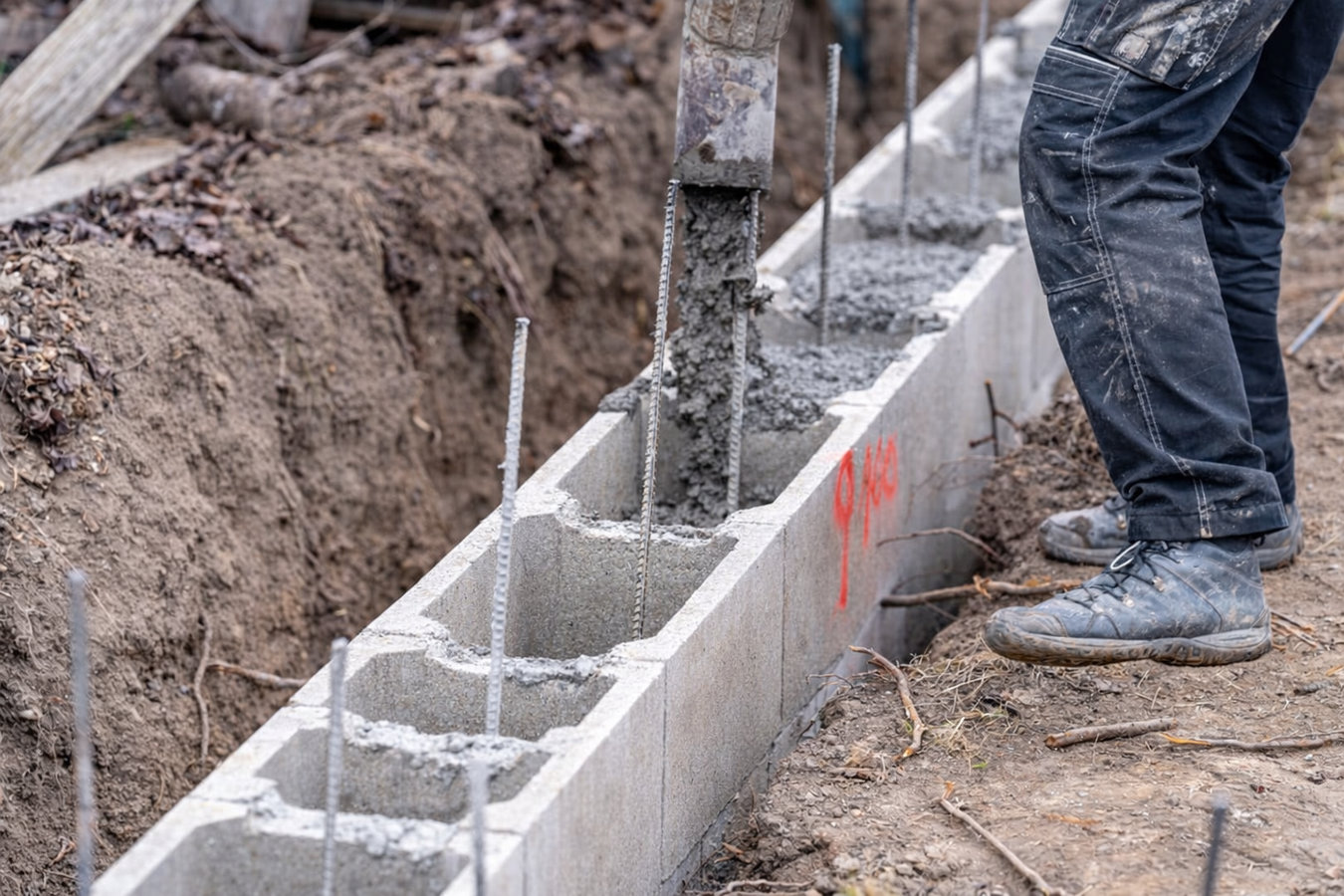
If a full concrete replacement is the better long-term answer - because the slab is deteriorated, not just settled - we offer concrete footings and complete foundation work to bring your structure back up to current standards.
Best for homeowners who need the area back in use quickly - foam cures the same day and is lightweight on the soil below.
A proven, cost-effective method suited for larger void areas where the material cost difference matters more than cure time.
Ideal for residential garages where a sloped or dipped floor makes the space awkward to use and accelerates surface wear.
For front or rear entry stoops that have settled away from the threshold, creating a step hazard and a gap for water to enter.
Leominster sits in Worcester County, where the ground freezes and thaws repeatedly every winter. Each cycle expands the soil as water freezes and contracts it as the ground thaws. Over 40 or 50 years, that movement gradually erodes the compacted base beneath a foundation until a void forms and the slab begins to drop. Homes built between the 1940s and 1970s - a large share of Leominster's housing stock - were poured on soil that was compacted to the standards of that era, which are lower than what is required today.
Parts of the city also sit on glacially deposited soils that contain clay layers. Clay swells when wet and shrinks when dry, which amplifies the foundation movement that freeze-thaw cycles start. Homes near lower-lying areas along the North Nashua River corridor or near the city's retention ponds see the most pronounced effects, because water table fluctuations add another variable to the soil movement problem.
We work across Leominster and into the surrounding area. Homeowners in Fitchburg deal with the same soil and climate conditions, and we serve that area regularly. Gardner homeowners with older post-war homes also call us for foundation work, as do property owners in Worcester where the same mix of older housing stock and clay-heavy soils is common.
We ask a few basic questions about where the problem is and what you have noticed. You will hear back within 1 business day, and we schedule an on-site visit - not a phone estimate.
We walk the area with you, look at the slab, the surrounding soil, and any visible cracks or gaps. You get a written estimate covering method, scope, and cost before any work is scheduled.
If the work requires a permit from the Leominster Building Department, we file it. Permit timelines add a week or two; we keep you updated so the scheduling does not catch you off guard.
The crew drills small holes, injects the lifting material, monitors the slab as it rises, patches the holes, and cleans the work area. Most jobs wrap up in a single day.
Written estimate, Leominster permit handled, 1 business day response - no deposits until work is scheduled.
(978) 230-0966We carry the state contractor license required for structural work and handle all permit filings with the Leominster Building Department. You get documentation that the work was done legally - which matters at resale.
We have worked on homes across Leominster - from the denser older neighborhoods near downtown to single-family homes out toward Leominster State Forest. We know the clay-heavy soil conditions in lower-lying areas and what they mean for how long a raising repair will hold.
Every project gets a written scope covering method, drill locations, patch work, and total cost. No verbal agreements, no price surprises when the crew shows up. The estimate visit is also your chance to ask every question you have about the process.
Spring is the busiest season for foundation work in Leominster, and we tell you honestly when we can start rather than giving you a date that moves. Most homeowners hear back within 24 hours of their first inquiry.
Getting a foundation raised is not a glamorous project, but it is an important one. A slab that keeps settling each spring will eventually become a replacement job - and a replacement costs several times more than a lift. The sooner a sinking foundation is addressed, the simpler and less expensive the fix. Contact us to schedule your estimate.
When a damaged slab section needs to be removed cleanly before repair or replacement work can begin.
Learn moreFull slab replacement for foundations that have deteriorated past the point where lifting alone will hold.
Learn moreSpring is when settling problems are most visible, and our schedule fills fast. Reach out now and we will get an estimate visit on the calendar before the busy season locks up.