
Sidewalks, Walkways & Flatwork
Safe, attractive concrete walkways that connect your property and enhance your curb appeal.
Why Your Walkways Matter
Your walkways are the paths your family, friends, and guests use every day to get to your front door, backyard, or garage. When they're cracked, uneven, or just plain ugly, they're not just an eyesore. They're a safety hazard and a bad first impression of your home.
Here in Leominster, we see a lot of old concrete sidewalks and walkways that have heaved from frost, sunk from poor base work, or cracked from tree roots. Some homeowners try to live with them, but eventually, someone trips and gets hurt, or they decide to sell and realize their walkways are hurting their home's value.
Good concrete walkways do more than get you from point A to point B. They frame your landscaping, guide people naturally through your property, and add to your home's overall appearance. We've been installing sidewalks, walkways, and all types of flatwork in this area for years, and we know how to build them so they stay level, safe, and good-looking for decades.
The Flatwork We Install
Flatwork is the term we use for any horizontal concrete surface. Here are the types of flatwork projects we handle:
- Front walkways: The path from your driveway or street to your front door, often the first thing visitors see
- Side walkways: Connecting paths between your driveway, backyard, garage, or side entrances
- Garden paths: Meandering walkways through landscaping or between garden beds
- Public sidewalks: Sidewalks along the street that meet municipal specifications and accessibility requirements
- Concrete steps: Entry steps, porch steps, and transitions between different elevation levels
- Equipment pads: Flat concrete pads for AC units, generators, trash enclosures, or pool equipment
- Parking pads: Small concrete areas for extra parking, RVs, or trailers
Each type of flatwork has specific requirements for thickness, reinforcement, and finish. A front walkway needs to be wide enough for two people to walk side by side comfortably. Public sidewalks have to meet ADA requirements for slope and smoothness. Equipment pads need to be perfectly level. We know these details and build each project correctly for its intended use.
Design Choices for Your Walkways
Walkways don't have to be boring gray strips of concrete. You have options to make them match your home's style and complement your landscaping.
Width and Layout
A standard walkway is 4 feet wide, which lets two people walk comfortably side by side. For less frequently used paths, 3 feet works fine. We can curve walkways to follow your landscaping or create interesting sight lines, or keep them straight and direct for a more formal look.
Finish Options
The finish determines both the look and the traction of your walkway. A broom finish provides good slip-resistance and a clean, simple appearance. Exposed aggregate shows the natural stones in the concrete and adds texture. You can also choose stamped concrete for a more decorative look that mimics stone or brick.
Borders and Accents
Adding a border of brick, stone, or colored concrete can dress up a plain walkway. Decorative scoring or saw cuts create panels that break up the visual monotony of a long walkway. These details don't add much to the cost but significantly improve the appearance.
We'll show you examples of different finishes and layouts so you can choose something that works with your budget and your home's style. Whether you want simple and functional or decorative and distinctive, we can build it.
How We Build Walkways That Last
The longevity of a concrete walkway comes down to proper installation. We've seen too many walkways that were just poured on top of existing soil with no base preparation. Those walkways sink, crack, and become tripping hazards within a few years.
Excavation and Base
We excavate to the proper depth, removing grass, roots, and soft soil. Then we install a compacted gravel base that provides stability and drainage. This base prevents the concrete from settling unevenly. In areas with clay soil or poor drainage, we may go deeper or add additional drainage features.
Proper Slope for Drainage
Walkways need to be sloped slightly so water runs off rather than pooling on the surface or draining toward your foundation. We typically slope at about 1/4 inch per foot. It's enough to drain water but not enough to notice when you're walking on it.
Reinforcement and Control Joints
We use wire mesh or fiber reinforcement to minimize cracking. Control joints are cut or formed at regular intervals to direct where cracks will occur if they do happen. A properly placed control joint means any cracks will be straight and at planned locations rather than randomly spider-webbing across your walkway.
Finishing
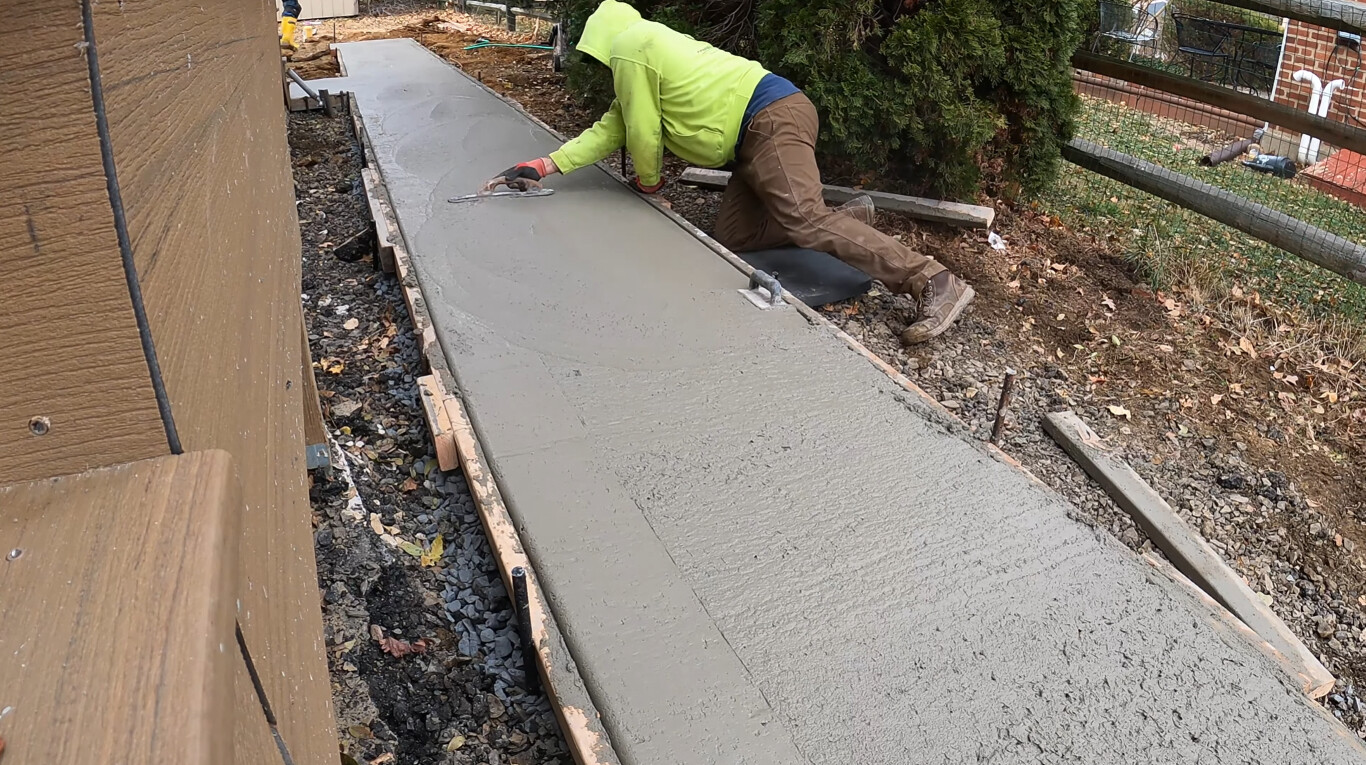
We float the concrete to a smooth surface, then apply the finish you've chosen. For broom finish, we drag a broom across while the concrete is still workable to create texture. We pay special attention to edges, making sure they're rounded and smooth so they won't chip easily. Finally, we protect the fresh concrete while it cures.
The entire process typically takes 2 to 3 days from start to finish, including curing time. You can walk on your new walkway within 24 hours, though we recommend waiting a few days before heavy use.
Why Choose Concrete for Walkways
Concrete isn't your only option for walkways, but it's often the best choice for durability, maintenance, and cost.
Concrete lasts longer than alternatives. Asphalt walkways crack and need resurfacing within 10 to 15 years. Pavers can shift and sink, requiring periodic resetting. Gravel paths need constant refreshing and never stay neat. A properly built concrete walkway can last 30 to 40 years with minimal maintenance.
It's safer. Concrete provides a smooth, even surface without the tripping hazards of uneven pavers or loose gravel. This matters for everyone, but especially for older adults and young children. Snow removal is easier on concrete than on pavers or gravel.
Maintenance is minimal. Sweep it off, hose it down occasionally, and you're done. No sand to replace, no weeds growing through joints, no boards to replace like with wood boardwalks.
It improves your property value. Well-maintained walkways that connect different areas of your property logically make your home more functional and appealing. When you sell, buyers notice things like safe, attractive walkways that don't need immediate replacement. If you're looking to upgrade other areas of your property, consider our driveway services as well.
Need New Walkways?
Let's talk about what you need and design walkways that fit your property. We'll provide a clear, detailed quote.
(978) 230-0966